The Philippines is facing stronger and more frequent typhoons, driven by warming oceans, making this the country’s most urgent climate challenge. These intensified storms not only destroy homes and communities but also tear families apart—forcing millions to evacuate, rebuild, or even relocate entirely. The effects are deeply personal: parents struggle to keep their children safe, provide food, and find secure shelter, while livelihoods are often wiped out in an instant. The economic impact is immense, with projections suggesting the country could lose over 13% of its economy by 2040. These storms also worsen food shortages, spread diseases like dengue and cholera, and threaten the safety of millions, especially those living in coastal areas. The growing intensity of typhoons highlights how climate change is making life increasingly difficult for Filipino families each year.
Saturday, December 28, 2024


Sunday, December 1, 2024
Climate Risk Profiles - Jamaica and the Philippines
New, Climate Risk Profiles for Jamaica and the Phillipines
Navigating Climate Risks: A Comparative Insight into Jamaica and the Philippines
Climate change presents an existential threat to vulnerable nations, with Jamaica and the Philippines standing out as critical examples. Both nations grapple with escalating climate impacts, yet their experiences offer unique lessons for adaptation and resilience.
The Philippines: A Storm-Filled Horizon
With over 7,600 islands, the Philippines is a frontline state for climate-induced disasters. Averaging 20 typhoons annually, the archipelago faces mounting challenges from rising sea levels, intensified flooding, and landslides. Recent decades have seen some of the strongest storms on record, such as Super Typhoon Haiyan (2013) and Rai (2021), displacing millions and causing substantial economic loss.
Urbanization adds complexity, with 70% of urban residents at risk due to rising seas. Informal settlements, often concentrated in flood-prone areas, amplify vulnerabilities. Meanwhile, agriculture, health, and infrastructure sectors struggle under climate stressors like erratic rainfall and extreme heat. Yet, the Philippines actively pursues solutions: its National Adaptation Plan and disaster management laws exemplify structured resilience planning.
Jamaica: Struggling Against the Tide
In the Caribbean, Jamaica’s climate challenges stem from rising temperatures, stronger hurricanes, and coastal erosion. Over half its population lives within two kilometers of the coast, underscoring exposure to sea-level rise and storm surges. With 90% of GDP tied to tourism and coastal industries, climate impacts are as economic as they are environmental.
Jamaica’s food and water security face heightened risks. Extreme weather disrupts agriculture and water supply, while saltwater intrusion and erratic rainfall patterns jeopardize freshwater resources. Compounding these issues are threats to coral reefs and mangroves—key natural buffers against storms and sources of economic and ecological vitality.
Shared Challenges, Unique Pathways
Both nations illuminate the intersection of climate stressors and socio-economic vulnerabilities. Women, children, and Indigenous communities bear the brunt of climate impacts, yet their inclusion in adaptation efforts unlocks pathways for innovation. In Jamaica, for example, women-led initiatives and Maroon communities emphasize local resilience strategies. Similarly, in the Philippines, integrating traditional knowledge into modern adaptation plans enhances community engagement.
However, solutions require significant international collaboration and financing. Jamaica has leveraged funds from the Green Climate Fund and others to bolster infrastructure and renewable energy. The Philippines, with its extensive donor support, has implemented multi-hazard warning systems and urban adaptation programs.
The Road Ahead
As nations on the climate frontline, Jamaica and the Philippines exemplify both the urgency and potential of climate adaptation. Their stories reinforce a critical truth: while vulnerabilities are local, solutions demand global solidarity. Building resilience isn’t just a necessity for these nations—it’s a blueprint for a sustainable future.
Climate Risk Profiles
Podcast
This podcast discusses two USAID climate risk profiles, one each for Jamaica and the Philippines. The profiles highlight the vulnerabilities of these nations to climate change impacts, emphasizing how these risks threaten development goals by impacting key sectors like tourism, agriculture, and energy. The discussion details specific hazards faced by each country—hurricanes for Jamaica and typhoons for the Philippines—along with the resulting economic losses and societal impacts, particularly on vulnerable populations such as coastal communities, women, and the poor. Finally, the excerpt underscores the need for adaptation strategies, showcasing community-led initiatives and the role of international organizations like USAID in supporting resilience-building efforts.
Saturday, July 18, 2015
The Future of Earth - By Fire
.jpg/800px-The_life_cycle_of_a_Sun-like_star_(annotated).jpg)
Sunday, June 1, 2008
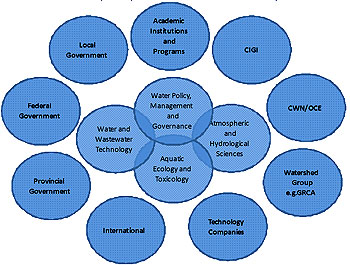
A New World Water Power?
http://www.bulletin.uwaterloo.ca/2008/may/30fr.html
UW could lead the world in water
Waterloo “may be the best positioned” university in North America, perhaps in the world, to be “the leading centre in water research”, says a report that’s being made public this week by UW’s provost.
Tuesday, September 11, 2007
Land use change and global warming
Albedo effect
Other scientists have also recently come to the conclusion that northern forests, although critically important in maintaining biodiversity, might be less important in slowing climate change than tropical forests. Govindasamy Bala and Ken Caldeira found that tropical forests help cool the Earth in two ways: by storing carbon and also by reflecting the suns warming rays back to space5. "Unlike tropical forests, high latitude forests darken the Earth's surface, causing the earth to absorb more sunlight, an effect that is most pronounced in snowy regions. This darkening of the surface has a warming influence that can be stronger than the cooling influence of carbon storage in these forests," says Caldeira. This suggests that removing high-latitude forests would have a net cooling effect on the planet, whereas removal of tropical forests would result in warming.
What is interesting here is what has been happening for the past 30 to 50 years. Northern forests have been growing and tropical forests have been shrinking. Thus, according to the above, this should lead to warming. How much of this land use change impact is included in the models of climate change? Not sure.
Friday, August 10, 2007
New Model: Some near term offset of anthropogenic warming
A new model, published in Science, that includes more information about the internal variability of the Earth system (e.g. El Ninos, etc.) predicts some potential for ameliorating anthropogenic warming in the next tens years (yet about 50% of the years after 2009 are still predicted to be warmer than 1998 (the warmest so far)).
___
Science 10 August 2007:
Vol. 317. no. 5839, pp. 796 - 799
DOI: 10.1126/science.1139540
Improved Surface Temperature Prediction for the Coming Decade from a Global Climate Model
Doug M. Smith,* Stephen Cusack, Andrew W. Colman, Chris K. Folland, Glen R. Harris, James M. Murphy
Previous climate model projections of climate change accounted for
external forcing from natural and anthropogenic sources but did not
attempt to predict internally generated natural variability. We
present a new modeling system that predicts both internal variability
and externally forced changes and hence forecasts surface temperature
with substantially improved skill throughout a decade, both globally
and in many regions. Our system predicts that internal variability
will partially offset the anthropogenic global warming signal for the
next few years. However, climate will continue to warm, with at least
half of the years after 2009 predicted to exceed the warmest year
currently on record.

Fig. 4. Globally averaged annual mean surface temperature
anomaly (relative to 1979–2001) forecast by DePreSys starting from June
2005. The CI (red shading) is diagnosed from the standard deviation of
the DePreSys ensemble, assuming a t distribution centered on
the ensemble mean (white curve). Also shown are DePreSys and ensemble
mean NoAssim (blue curves) hindcasts starting from June 1985 and June
1995, together with observations from HadCRUT2vOA (black curve).
Rolling annual mean values are plotted seasonally from March, June,
September, and December. The mean bias as a function of lead time was
computed from those DePreSys hindcasts that were unaffected by Mount
Pinatubo (SOM text) and removed from the DePreSys forecast (but not the
hindcasts).
Technorati Tags: climate, climate model, global warming, climate change
Powered by ScribeFire.
Friday, January 5, 2007
Milankovitch is spot-on
This finding helps make sense of the role that orbital changes play in ice volume. Up to this point there has been some confusion since ice volume has not always followed orbital parameters with any consistency. With this finding we see that orbital parameters play a role in how quickly the ice volume changes.
That CO2 has a secondary role to orbital parameters has been known to climate scientists for some time. The role of CO2 has been considered one of a positive feedback to orbital parameters with increased warming form changes in solar energy leading to more CO2 which leads to more warming.
Further research:
The impact of this research on how understanding of climate sensitivity.
GEOPHYSICAL RESEARCH LETTERS,VOL. 33, L24703, doi:10.1029/2006GL027817,2006
In defense of Milankovitch
Gerard Roe
Department of Earth and Space Sciences, University of Washington, Seattle, Washington, USA
Technorati Tags: climate change, global warming, climate, paleoclimate, global ice volume, milankovitch
Wednesday, December 27, 2006
World Ocean Heat Content
From:
http://www.jodc.go.jp/project/GODAR/workshop2006/wscr339.pdf
Warming of the World Ocean, 1955-2006
Sydney Levitus
Director, World Data Center for Oceanography, Silver Spring
We describe the most recent estimates of the global integral of ocean
heat content through the third quarter of 2006. After cooling during
2003-2004 the ocean has begin to warm again although the warming is
not yet statistically significant.
with a little more (not much) information available from their AGU fall meeting abstract
I'm looking forward to an actual publication to read. Until then and to catch up to speed we should read this possibly key document (PDF). Updates to come.
Technorati Tags:
global warming
climate change
oceans
climate